Alice’s fear of Imogene
The Best Christmas Pageant EverAlice Wendleken’s fear of Imogene Herdman is a practical force in the Christmas pageant: it helps keep Alice from volunteering for the role of Mary, even though that is the part she usually plays. Her fear is not presented as vague timidity. Imogene threatens concrete forms of harassment, and the account of Ollie Herdman’s injury gives one especially grotesque threat a precedent. Alice’s later willingness to step in does not erase the intimidation; instead, it shows how fear and responsibility coexist in her response to the pageant.
What the Fear Is Based On
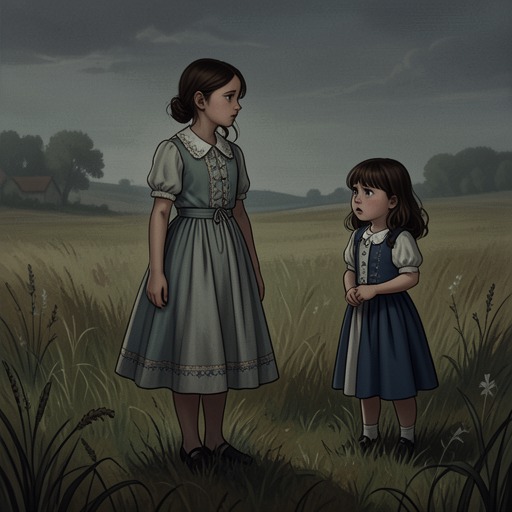
After the pageant discussion, Narrator’s Mother asks Alice why she did not raise her hand to be Mary. Alice says she does not know, and looks angry. The narrator supplies the explanation: Imogene has warned Alice what will happen if she volunteers. The threats include striking her on the head, drawing on her homework, and putting worms in her coat pocket. These are described as familiar kinds of behavior from Imogene, not as distant or implausible possibilities. Alice’s failure to volunteer is therefore connected to a pattern of intimidation that reaches into ordinary school life.
Imogene’s most elaborate threat concerns a pussy willow. She says that when the pussy willows come out in spring, she will push one so far down Alice’s ear that it cannot be reached; it will sprout and grow there, leaving Alice with a bush growing out of her ear. The threat is absurd in its scale but specific in its proposed method and consequence. The narrator says it was the worst thing the children had thought up, while also insisting that something like it could happen because Ollie once had a sprouted pussy willow dug out of his ear at the hospital. A nurse examining Ollie’s ear found something growing inside it, and he had to be put under while it was removed. That prior incident makes Imogene’s threat more than an empty flourish in Alice’s eyes.
Silence, Defiance, and the Pageant Role
Alice’s silence when Mary is being assigned has an immediate consequence: she does not claim the part she says she is always given. The narrator recognizes the discrepancy between Alice’s later account and the reason she stayed quiet. On the walk home, the narrator tells Alice that Imogene would not really do all the things she threatened. Alice rejects that reassurance, answering that the Herdman family will do anything. Her certainty is presented against the narrator’s attempted comfort, making clear that the narrator’s confidence cannot undo Alice’s assessment of the danger.
Alice also insists that she does not care what Imogene does and that she is always Mary in the pageant. That declaration sits beside the earlier explanation for her silence rather than resolving it. She can assert her claim to the role, yet still be deterred from raising her hand when the choice is being made. The contrast captures the pressure Imogene exerts: Alice’s usual place in the pageant is familiar to her, but claiming it in this moment risks retaliation outside the performance.
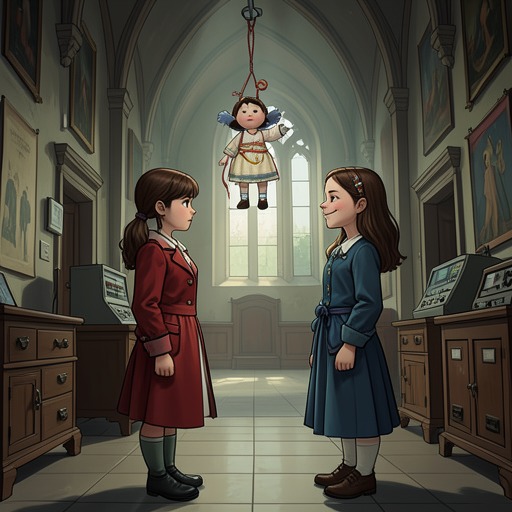
Her fear does not make Alice indifferent to the pageant or permanently unwilling to take the role. Later, while standing in the back row of the angel choir, she tells the narrator that she can step in and be Mary if necessary. She proposes that the Perkins baby could play Jesus, while objecting to Imogene handling the baby. This offer is conditional, but it marks an important change in what Alice is prepared to do: she is willing to serve as a fallback when the pageant lacks both Mary and a baby Jesus. Her concern about Imogene’s access to the infant shows that distrust remains active even as Alice offers help.
Suspicion and the Herdman Family
Alice’s apprehension is part of a broader effort to have the Herdman family removed from the pageant. When Imogene discusses the possibility of the baby Jesus being murdered, Alice regards the subject as improper and adds it to a list of complaints about the children, alongside swearing, smoking, and stealing. She hopes that one sufficiently serious offense will persuade her mother to have the children thrown out. Her response shows that she interprets their conduct not as a reason to accommodate them, but as a possible basis for exclusion.
That impulse also shapes Alice’s alternative casting proposal. The Perkins baby, in her view, would make a terrific Jesus, but the arrangement depends on keeping Imogene away from him. The pageant’s practical problem is that there is no baby available: families who had initially offered infants withdrew them after learning that the Herdman family was involved. Alice’s fear thus connects a personal conflict to the performance’s larger difficulty. The threat she associates with Imogene informs both whom she will play and whom she considers safe to place in the central role.
Significance in Alice’s Story
Alice’s fear is established through actions and choices rather than through an extended account of her feelings. She does not raise her hand; she gives no explanation when asked; she resists the narrator’s reassurance; and she later makes help conditional on keeping Imogene away from the baby. Together, these details show fear operating as a constraint on Alice’s participation, not as a simple refusal to take part in the pageant.
At the same time, Alice’s readiness to become Mary if needed complicates the picture. She remains protective of her customary role and concerned about the pageant’s arrangements, even while expecting Imogene to be dangerous. Her fear therefore marks both the reach of Imogene’s intimidation and the limits of its control: Alice can be silenced at the moment of volunteering, but she still offers herself when the performance’s needs become urgent. The gap between those responses gives the state its significance in the story: the pageant’s assignments are shaped not only by who wants a role, but by who feels safe enough to claim it.